African Penguins are one of Cape Town’s most beloved attractions, and seeing them in their natural habitat is something my guests remember for years. Here is everything you need to know about where to find them, when to go, and how to make the most of your visit.
Boulders Beach, Simon’s Town
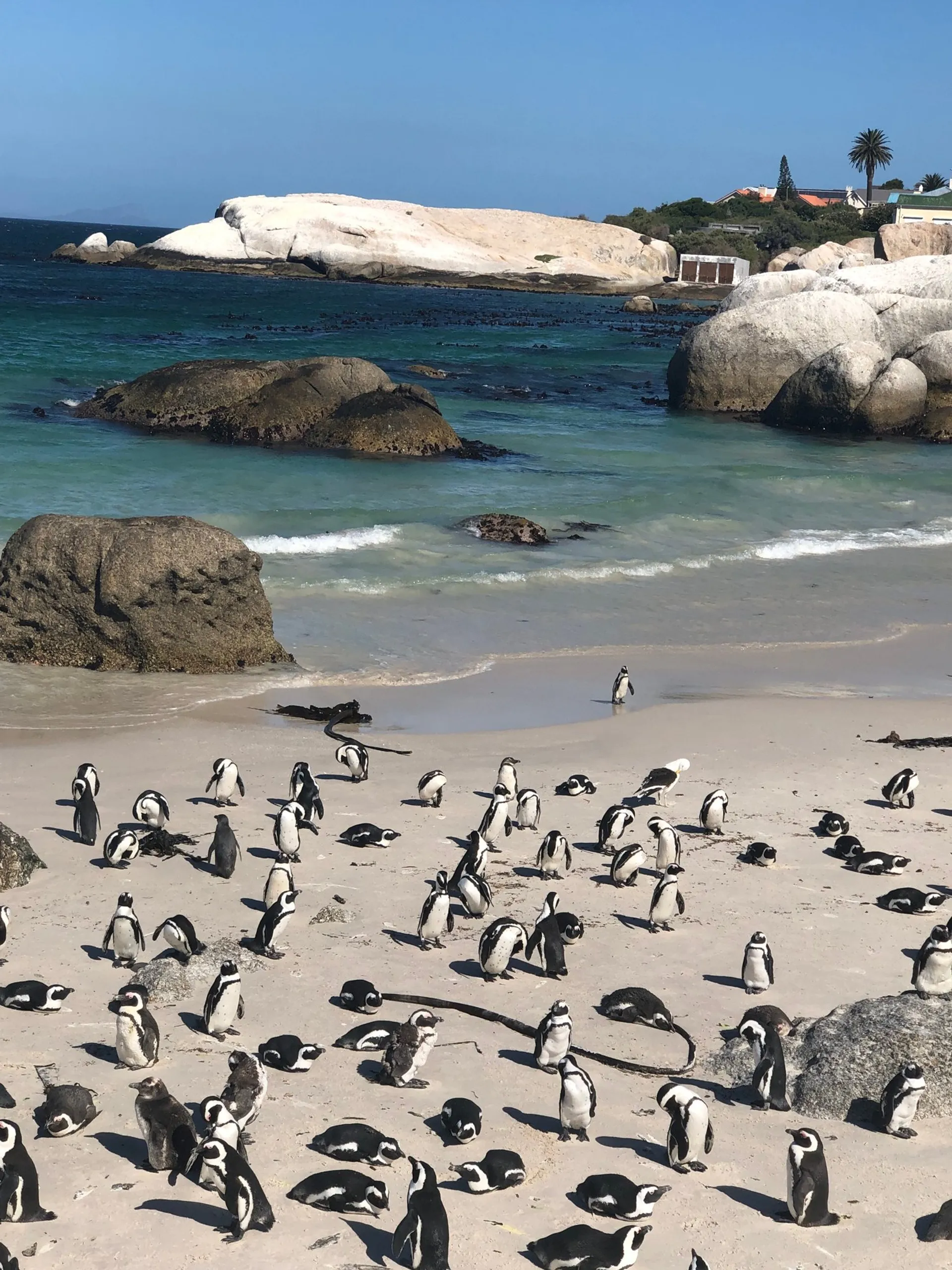
Boulders Beach is the most famous penguin colony in Africa and one of only a few places in the world where you can get within metres of wild penguins. Located in the seaside town of Simon’s Town, about 40 minutes south of Cape Town, the colony is home to around 3,000 African Penguins.
What to expect:
- Wooden boardwalks lead through coastal fynbos to viewing platforms directly above the colony
- Penguins waddle freely between the boulders, nest in the vegetation, and swim in the sheltered cove
- The birds are completely habituated to humans and carry on with their lives while you watch
- You can swim at the adjacent public beach (Seaforth Beach) where penguins sometimes join you in the water
Entrance fee: R176 per person for international visitors (2025). South African residents pay a reduced rate.
Best time to visit: Early morning (before 10am) or late afternoon (after 3pm) to avoid the midday tour bus crowds. The penguins are most active in the morning and late afternoon.
How long to spend: 30 to 60 minutes is usually enough to see everything and take plenty of photos.
Betty’s Bay (Stony Point)
If you want a quieter, less touristy penguin experience, Stony Point at Betty’s Bay is an excellent alternative. This colony is smaller (around 2,000 penguins) but far less crowded, and the setting on a rocky shoreline is arguably more dramatic.
Betty’s Bay is about 90 minutes from Cape Town along the scenic Clarence Drive, making it a natural stop on the way to or from Hermanus. The entrance fee is significantly lower than Boulders Beach (around R30), and you will often have the boardwalks largely to yourself.
Robben Island
While Robben Island is best known as the former prison where Nelson Mandela was held, it is also home to a significant penguin colony. You will see penguins on the island during the standard Robben Island tour, though the focus of that visit is the prison and its history.
Why African Penguins Matter
African Penguins are classified as endangered. Their population has declined by over 97% since the early 1900s, falling from an estimated 1.5 million breeding pairs to fewer than 20,000 today. The main threats are overfishing of their prey species (sardines and anchovies), oil spills, and habitat loss.
Your entrance fee at Boulders Beach directly funds conservation efforts managed by SANParks (South African National Parks). By visiting, you are contributing to the survival of this species.
Tips for Your Visit
-
Do not touch the penguins. They may look cuddly, but they have sharp beaks and will bite if they feel threatened. Keep at least 1 metre distance if a penguin approaches you on the path.
-
Bring a zoom lens. While you can get close on the boardwalks, a 70-200mm lens will let you capture beautiful close-up portraits without disturbing the birds.
-
Watch for nesting pairs. African Penguins are monogamous and share parenting duties equally. You will often see one partner sitting on the nest while the other returns from fishing.
-
Combine with other attractions. Boulders Beach is on the route between Cape Town and Cape Point. I always include it as part of a full-day Cape Peninsula tour, along with Chapman’s Peak Drive and the Cape of Good Hope.
-
Visit the naval museum in Simon’s Town while you are in the area. The town has been a naval base since 1814 and is full of maritime history. Look for the statue of Just Nuisance, the only dog ever officially enlisted in the Royal Navy.
Seeing African Penguins in the wild is one of those rare wildlife experiences that delights absolutely everyone, regardless of age. It is consistently rated as one of the top things to do in Cape Town, and having guided thousands of guests to Boulders Beach, I can confirm that it lives up to every expectation.